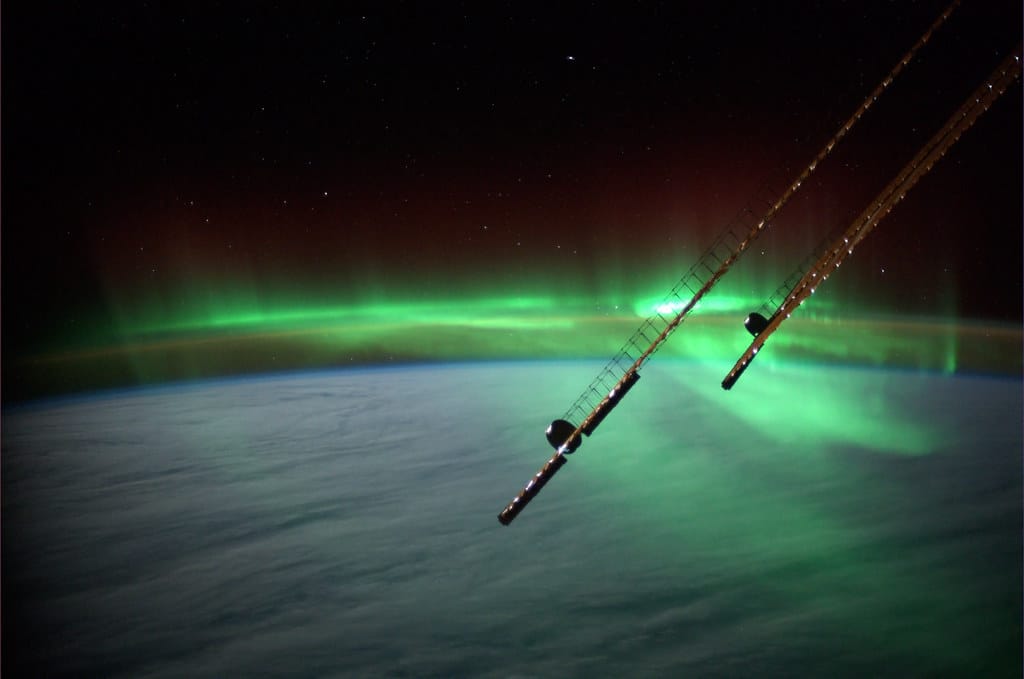
Niagara Falls, Ontario, witnessed a breathtaking natural spectacle as the northern lights, also known as the aurora borealis, graced the night skies, thanks to a major geomagnetic storm affecting both Canada and the U.S. This rare event, which occurred overnight, provided residents and visitors in southern Ontario and the Greater Toronto Area with an unforgettable view of the dancing lights in the sky.
The geomagnetic storm, described as the most intense in nearly two decades, not only brought the northern lights further south than usual but also had potential impacts on technology and the environment. The U.S. Space Weather Prediction Center issued a severe geomagnetic storm watch, highlighting the possibility of disruptions to communications, the electric power grid, navigation, radio, and satellite operations.
Effects on Environment and Technology
Geomagnetic storms are known to affect the Earth's magnetosphere, with charged particles from the sun interacting with our planet's magnetic field. This interaction can lead to various consequences, including the mesmerizing aurora borealis. However, these storms also pose risks to technological infrastructure. The National Oceanic and Atmospheric Administration (NOAA) warned of potential widespread voltage control problems and the possibility of protective systems mistakenly tripping out key assets from the power grid.
In addition to technological impacts, geomagnetic storms have been observed to cause depletion in the mesospheric ozone layer, which could have implications for global climate change. This depletion, triggered by the same phenomenon responsible for aurorae, underscores the interconnectedness of space weather events and Earth's environmental systems.
Historical Context and Safety Precautions
The illumination of Niagara Falls has a rich history, dating back to the summer of 1860. Over the years, the technology used to light up the falls has evolved significantly, from Bengal lights to modern LED systems, enhancing the spectacle for visitors.The recent geomagnetic storm and the resulting northern lights add a natural layer to this tradition of illumination, reminding us of the awe-inspiring power of nature.
Given the potential for geomagnetic storms to disrupt critical infrastructure, it's essential for operators of these systems to take protective action. The NOAA's Space Weather Prediction Center has been proactive in notifying relevant stakeholders, allowing them to mitigate the risks associated with such space weather events.
A Rare and Enchanting Display
The occurrence of the northern lights in Niagara Falls, driven by a severe geomagnetic storm, offered a unique opportunity for skywatchers to witness one of nature's most spectacular phenomena. While the event was a visual treat, it also served as a reminder of the need for vigilance and preparedness in the face of space weather events that can impact our technological systems and the environment.
As the community reflects on this extraordinary event, the importance of ongoing research and monitoring of geomagnetic storms becomes evident. Understanding these phenomena not only helps protect our infrastructure but also deepens our appreciation for the dynamic and interconnected nature of our planet and its place in the cosmos.
Members Discussion